I build in categories where the right product form isn’t obvious at the start — consumer apps, SMB workflows, marketplaces, and AI products that have to earn trust before they earn habit.
My work combines a designer’s eye for behavior and product experience, a GM’s attention to GTM and unit economics, and a builder’s bias toward action under ambiguity.
By the numbers — 13+ years in product · $500M+ cumulative product and venture revenue · products shipped across US, EU, and APAC · teams of 8–40 across PM, design, engineering, data, and GTM · 4 ventures incubated 0→1
Selected Work
Product problems I've solved
01
Case study
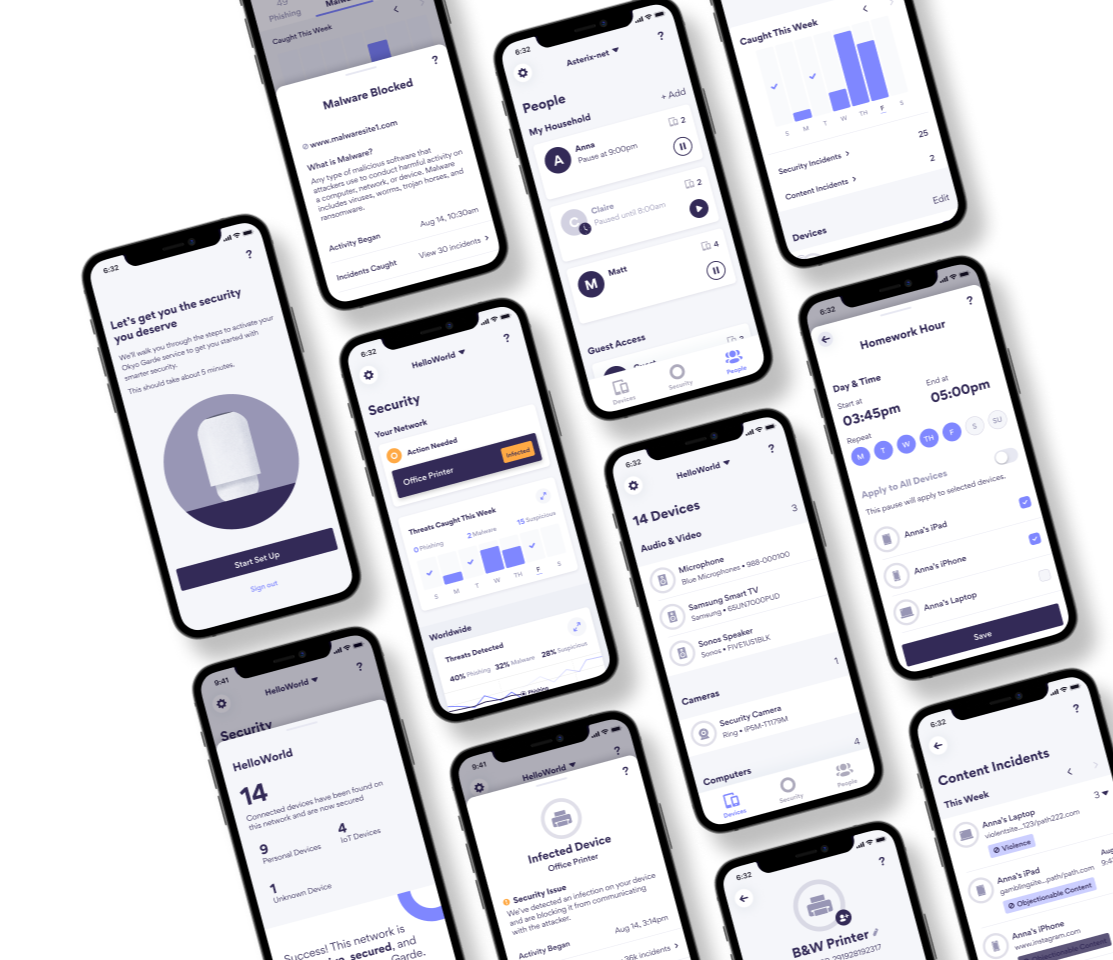
Cybersecurity simplified into a consumer app
Product Strategy × Consumer Adoption
Palo Alto Networks had world-class enterprise security, but no obvious consumer category to enter. Okyo Garde was a 0→1 bet to turn enterprise-grade protection into a household product — built inside a company learning B2C for the first time.
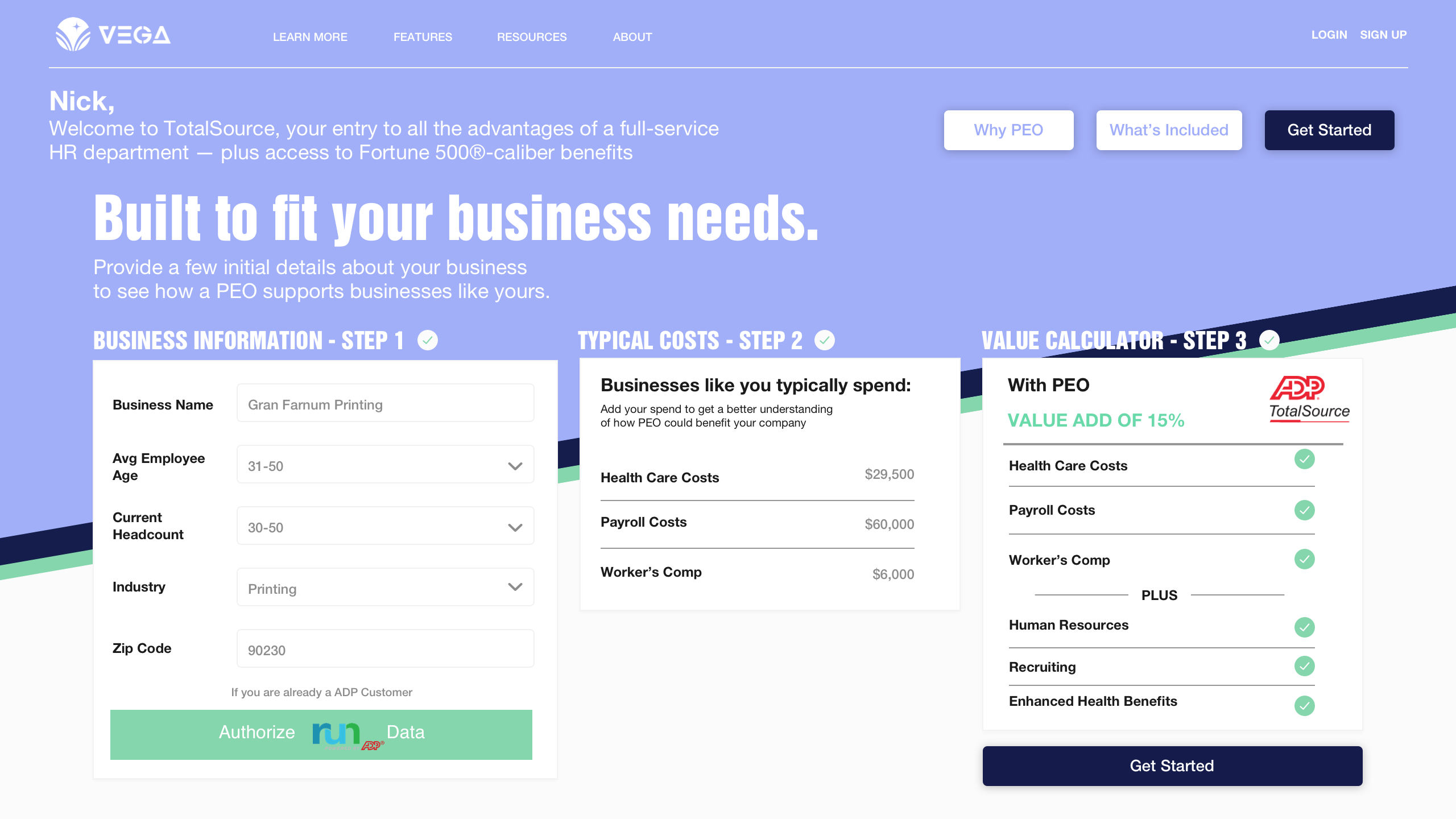
Turning a complex HR offering from a sales-led experience into a digital self-serve product
Self-Serve × Conversion
Reframed a stalled B2B SaaS sales motion at ADP into a commercialization pivot — turning a complex, sales-dependent HR product into a digital self-serve experience SMBs could evaluate and buy on their own.
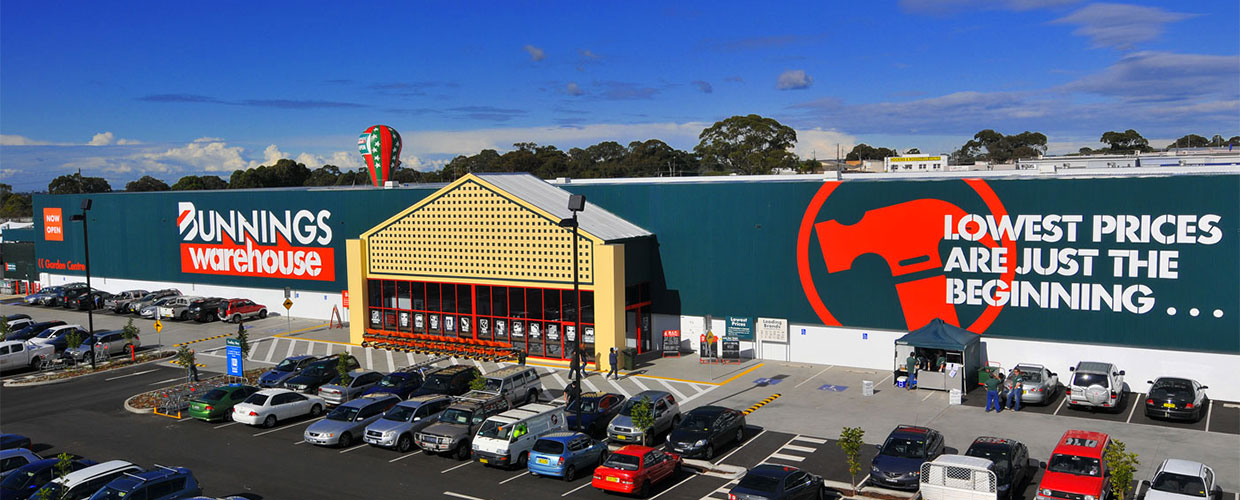
Pivoting a Home Services Marketplace into Workflow SaaS
Market Entry × Business Model
Bunnings wanted to extend its trade ecosystem into home services. Contractor workflow SaaS — not demand aggregation — became the stronger and more scalable wedge.
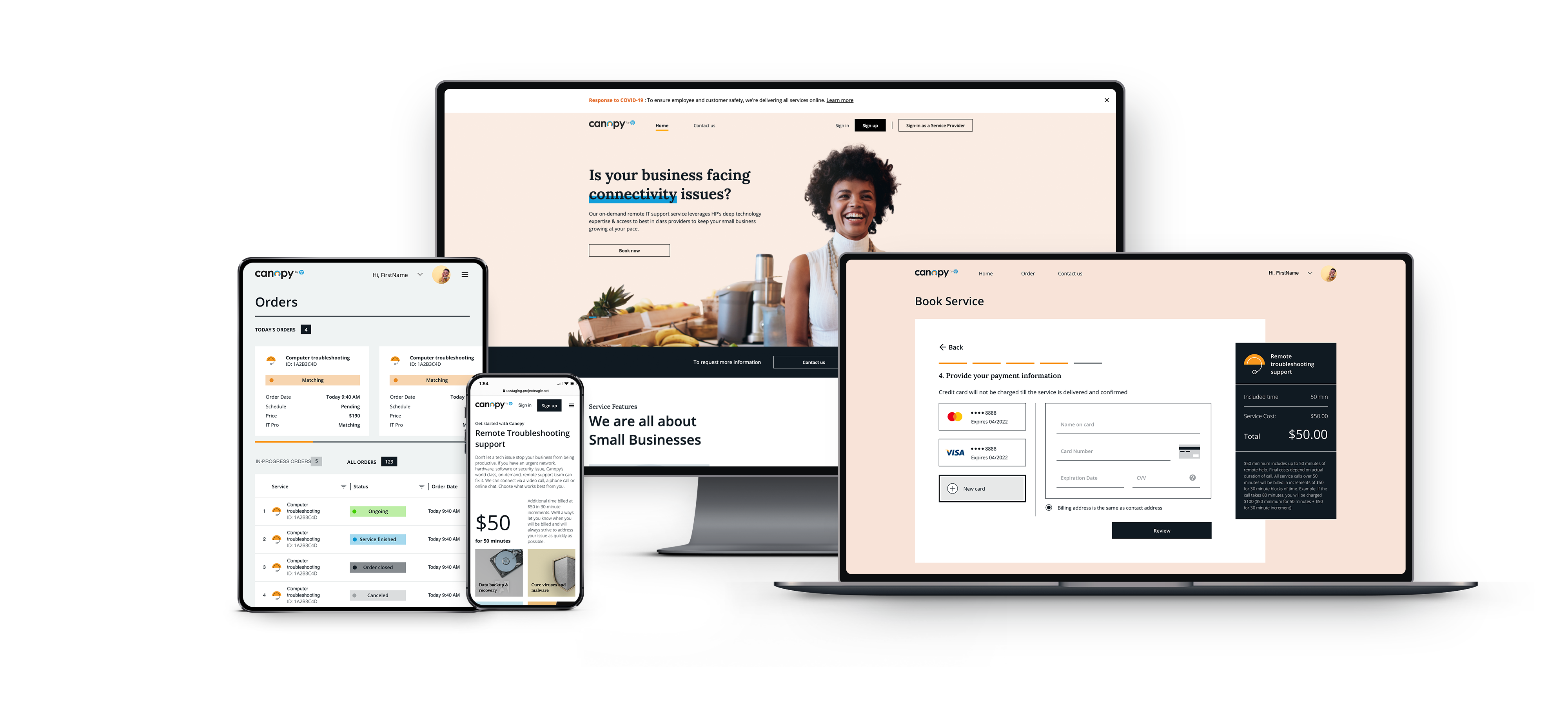
HP saw a higher-margin growth opportunity beyond hardware: SMB IT services. The challenge was turning messy break/fix support into a trusted digital service product small businesses could understand, buy, and rely on.
Finding the right product form when the category is fuzzy
When the customer problem is real but the product hasn't found its shape, I figure out what to actually build. Sometimes that's a SaaS workflow, sometimes a marketplace, sometimes a productized service, sometimes none of the above. The work is in not assuming the answer.
Design judgment from the start — not as a credential
I trained as a designer before I became a PM. That shows up as observing users in their real context, building around behavior rather than features, and treating craft as a strategic asset, not a downstream execution detail.
Making complex products feel buyable
From cybersecurity to PEO benefits to SMB IT services, I work in high-trust, high-consideration categories where adoption depends on whether users can understand and believe the product before they fully use it.
Product + GTM, not product in isolation
I think in unit economics, pricing, and GTM motion alongside product specs. That's how 0→1 work actually ships, scales, and compounds revenue — rather than getting stuck as a proof of concept.
How I Think
A few things I believe about product
01
Early product work should expose the riskiest assumption, not prove the easiest one.
Technical feasibility is almost never the assumption most likely to kill adoption. Whether the user who matters most actually has the problem you think they have — usually is. I design the first weeks of any new product around stress-testing that assumption, not building the most demoable version.
02
Value isn't complete until users can perceive it.
In complex categories — cybersecurity, AI, B2B platforms — a product can work perfectly and still feel like nothing is happening. The product job isn't done until value is legible: visible enough to trust, specific enough to recommend, real enough to renew.
03
Design is upstream, not downstream.
The most important design decisions aren't about color or polish. They're structural: what appears first, what's hidden, what's the default, what the system implies about how users should behave. These choices shape behavior before anyone reads a single word — and they're product strategy, not styling.
04
I'd rather build something a smaller group loves than something everyone tolerates.
In early products, love is a more reliable signal than completeness. It tells you whether you've found something worth scaling — or just something that technically works. Minimum lovable, not minimum viable.
AI-Assisted Product Experiments
Things I'm building on the side
I build small AI prototypes to develop sharper product intuition — about where intelligence belongs in a workflow, how much autonomy a system should have, and what trust cues make AI products actually adopted instead of ignored.
CURRENTLY BUILDING · MacOS APP
Daily Coach — An AI Coach for a Day That Keeps Changing
Problem. As a PM, my plan for the day rarely survived past late morning. Planning tools help you make the plan, but not with what comes after — the meeting that runs over, the task that doubles, the constant re-deciding of what to drop. That decision load was where my attention actually went.
Product bet. The opportunity wasn’t another planner or auto-scheduler. It was an AI coach designed to learn how you work—when you think best, how long tasks actually take—and shape your day around it. Unscheduled tasks find their place, habits stay on track even when plans change, and planning, doing, and focusing become one seamless flow. All while keeping your plans and activity history encrypted on your Mac.
Built. Inspired by a prototype I used daily. Tauri + TypeScript on the Mac, a Python LangGraph coaching service, Claude, and Langfuse and hosted on Oracle Cloud. Built with an LLM and run like a product team: nearly 100 logged decisions and 90+ reviewed PRs and over 2,640 automated tests.
Problem. Applying well to job roles is a research, judgment, and writing workflow. Each role requires reading the JD, assessing fit, researching company priorities, mapping the opportunity to past experience, and tailoring the resume — often 2–3 hours per role for a busy professional exploring multiple opportunities.
Product bet. The opportunity was not a smarter job board or AI resume rewriter. It was a multi-agent application pipeline where specialized agents screen fit, research company strategy, retrieve relevant experience, draft the resume, and evaluate it cold like a recruiter — reducing prep from hours to minutes while preserving human judgment and claim fidelity.
Built. Built in ~40 hours using Claude Code, Anthropic SDK, ChromaDB, Airtable, Pandoc, and Vercel. The system uses approved resume and story-bank inputs only, routes work across models, stores each role in Airtable, and gates every tailored resume through a six-criteria evaluator before sending a curated digest.
Problem. Preparing for the day as a PM meant checking too many disconnected sources — news, blogs, competitor updates, email, Slack, and calendar — then manually deciding what mattered and how it connected to my weekly goals, personal priorities, and professional learning.
Product bet. The opportunity was not another summary tool or feed aggregator. It was a “so what” layer: an agent that could connect external signals, personal context, and daily commitments into a brief that explains what matters, why it matters, and how to make time for it.
Built. Built with Claude Code and run locally through LM Studio using Hugging Face / Qwen 9B.
Problem. Busy households cycle through the same few meals. Finding something new means hopping across Google, YouTube, Instagram, and ChatGPT — and none of them hold taste, mood, and constraints in one place.
Product bet. Search and video help once users know what to cook; chat can suggest ideas but is not visual, persistent, or personal enough to plan around. The opportunity is not a better recommender — it is collapsing recommendations, recipes, images, and video into one flow, so the idea and the means to act on it live together.
Built. Live app in ~20 hours using Cursor, Supabase, YouTube, Pixabay APIs, and Vercel.
I write about product leadership and AI product building — particularly the parts the model-centric conversation misses: autonomy calibration, trust signals, stakeholder influence, and why technically accurate AI products still get ignored.
Resource
How to Choose the Right AI Technique.A practical grid for deciding between rules, classical ML, deep learning, and GenAI based on the job, data, and trust required.Download the grid →
The AI Integration Trap: Why More Automation Doesn't Mean Better Products.Using Sheridan & Verplank's levels-of-autonomy framework to think about where AI belongs in a workflow — and where it breaks trust by over- or under-automating.Read →
Why "Accurate" AI assisted Products Fail.AI adoption doesn't track model quality linearly. Two systems can be similarly accurate, yet one is trusted while the other is ignored — because users don't experience metrics, they experience signals.Read →
AI is rewiring the intelligence layer behind every product.The product war for the next decade won't be won at the interface layer. It'll be won at the interpret → decide → act layer.Read →
10 Effective Stakeholder Influence Tactics for PMs.A practical toolkit for influencing stakeholders in highly matrixed organizations — from rational persuasion and co-creation to strategic recognition and collaborative support.Read →
Selected Additional Work
More of what I've shipped
AI Security Broker, Palo Alto Networks — Launched a secure GenAI access platform for 15K employees, defining access workflows, policy guardrails, and adoption metrics; drove $8M annual productivity gain.
Fraud Decisioning Platform, Lvlon — Defined product strategy and roadmap for a fraud decisioning product, translating complex risk and payment workflows into a flexible self-serve system; unlocked $27M in incremental revenue.
AI Product Development Copilot, Lvlon — Led 0→1 development of an AI copilot that helped founders and product teams turn ambiguous ideas into structured product strategy, discovery, GTM, finance, and investor-ready outputs; defined core workflows, use cases, and initial UX for early validation.
Consumer Experience Platform, Blue Cross Blue Shield — Built and led a 5-person product, UX, and research team; drove 35% engagement lift and created a $110M+ incremental opportunity through a unified experience system across 36 plans.
Snacpod, SC Johnson — Turned a healthy-snacking brief into a modular behavior-change platform, reframing the problem from “help moms store healthy snacks” to “make kids curious enough to try them” through pods, combinations, routines, and reduced parent effort.
About
A bit about me
Currently
Based in Los Angeles. Open to Principal PM roles in large tech and Head of Product or Founding PM roles in startups.
Background
Consumer · SaaS · Marketplaces · AI
0→1 · Onboarding · Monetization · Behavioral Product Design
Master of Design, IIT Institute of Design
I came into product through a slightly unusual path.
I grew up in India, studied engineering, and found my way into design after a paragliding accident. Design gave me a sharper way to observe people and understand how products fit into their lives. But I was quickly drawn beyond the object or interface to a larger question: what makes something worth building, viable as a business, and adopted in the real world? That question pulled me into product management.
Since then, I've worked across a strange and useful range — from potato chips to consumer apps, cybersecurity, SMB services, marketplaces, and AI-enabled workflows. Different categories but similar user challenges. What I care about most is building products that some people genuinely love, and teams that feel braver for having shipped them.
Outside of work I build furniture, ride motorcycles, and am slowly learning to make shoes.
Outside of Work
Things I make outside of work
Making things outside software has kept my product instincts honest. Each of these influences how I think about real product work.
Woodworking & DIY
I build furniture and shop infrastructure for my own garage — most recently a mobile tool cart that solved my own workflow friction. Working in wood teaches a different kind of product discipline: you can't hide behind abstraction. Sequencing, tolerance, ergonomics, and the actual repeated use of the object all show up immediately.
Shoemaking
I'm slowly learning the craft of making shoes — a category where function, fit, identity, comfort, and feeling all sit on top of each other in a single object. It's a reminder that great products don't ask users to contort themselves into the product; they adapt to the human.
Motorcycles
Motorcycles make systems thinking physical. Power, weight, friction, feedback, timing, and control all have to work together — and small changes can alter the whole experience. They also remind me that products are never just functional. The best ones work across physical, cognitive, emotional, and cultural layers at the same time.