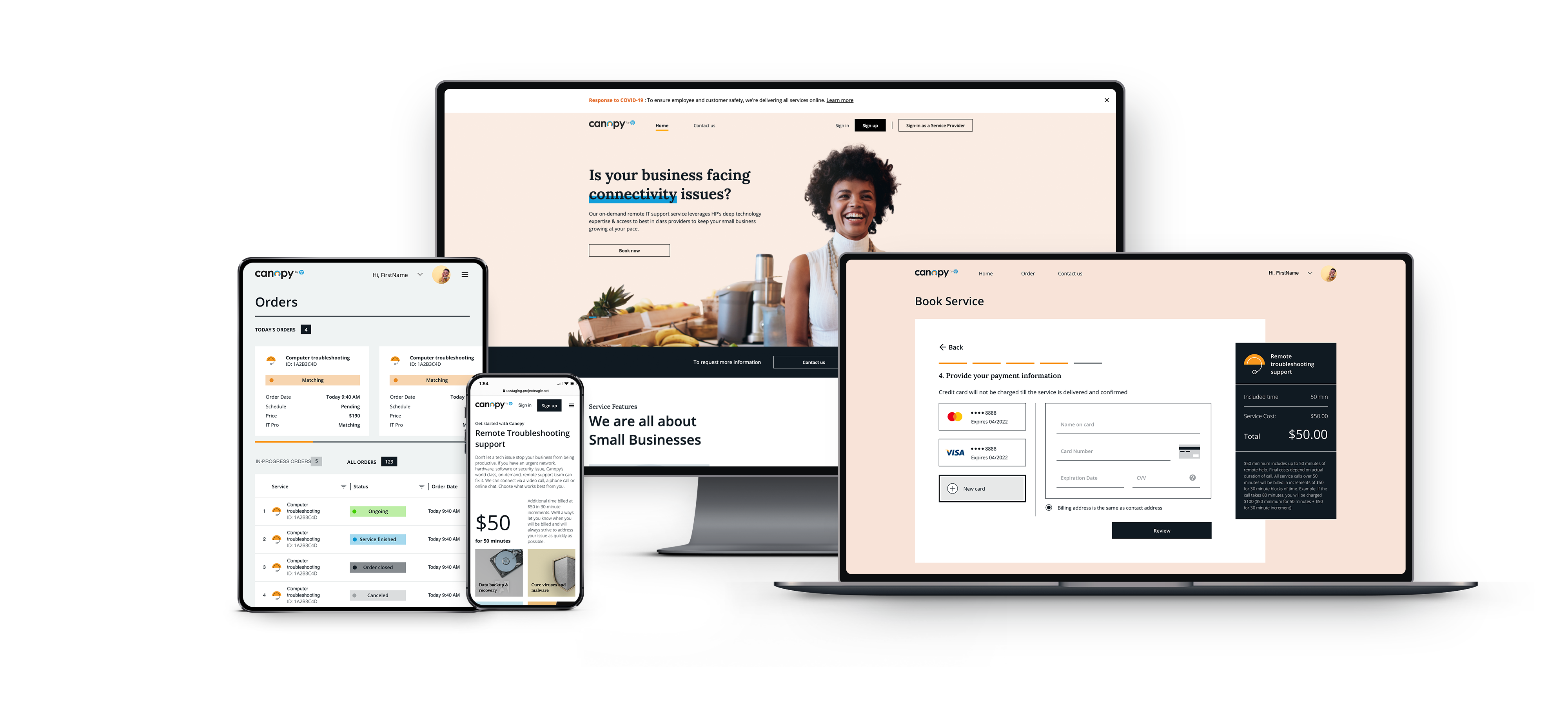
HP saw a $450M higher-margin growth opportunity beyond hardware: SMB IT services. VARs were already capturing revenue from break/fix support, device setup, networking help, and IT maintenance that HP was not directly monetizing.
For SMB owners, the pain was clear. Without in-house IT, their options were poor: expensive managed service providers, hard-to-vet local technicians, or DIY fixes that pulled them away from running the business.
The challenge was that IT support for SMBs is messy to productize: each job had a different issue, setup, urgency, and user comfort level. So the product problem became: how do we turn break/fix IT support into a digital service product small businesses can understand, buy, and rely on — before HP commits to a full platform build?
Product lead for HP's SMB IT services incubation. I reframed the work from “build the services platform” to “prove the service model first” — turning HP's higher-margin services opportunity into a testable digital support product for SMBs.
Owned product strategy, service design, pilot scope, and validation across customer intake, pricing, technician fulfillment, and service operations. Led the cross-functional team through pilot launch, using demand, conversion, service quality, and unit-economics evidence to build the case for scale.
I also mentored the design team and partnered with HP stakeholders to define the service identity for Canopy by HP — the sub-brand, experience principles, and trust cues needed to make a new SMB IT service feel credible and buyable.
Service-model validation before platform build.
The obvious path was to build the full digital services platform: AI-assisted issue triage, customer intake, scheduling, payments, service tracking, and a vetted provider marketplace. But the riskiest question was not whether HP could build software. It was whether SMBs would trust HP with break/fix IT support, pay for it, and receive a consistent enough experience to come back.
So I made the bigger bet: validate the service model first — demand, pricing, fulfillment, service quality, and unit economics — before committing to the full platform build.
- No-code validation vs. custom build: Used off-the-shelf tools like Zapier, Webflow, HubSpot, and Stripe, plus manual operations, to test demand, pricing, and service delivery before investing in custom platform development.
- Human intake vs. AI-first triage: Started with live phone intake to diagnose messy SMB issues, build trust, and learn what the model needed to handle before shifting more triage to HP's device analytics platform.
- Vetted network vs. open marketplace: Used HP's VAR/resellers and service-provider network first because SMBs needed reliable quality, and HP would own the trust risk.
- Service blocks vs. per-job pricing: Packaged support in prepaid hour blocks instead of pricing every issue separately, making the offer easier to buy while giving HP a more predictable revenue model.
A digital SMB IT support product that let small businesses buy, schedule, and receive trusted break/fix support from HP — connecting intake, assisted diagnosis, provider matching, field workflows, payments, and the Canopy by HP service identity.
- Customer buying flow: Digital flow to understand service options, buy prepaid support blocks, schedule help, and track job status.
- Assisted intake + diagnosis: Live intake with AI-assisted resolution recommendations using known issue patterns and HP device analytics.
- Provider matching + field workflow: Job routing to HP VARs first, then vetted providers; plus onboarding, assignment, and onsite resolution flows.
- Payments + quality controls: Customer payments, provider payouts, completion checks, post-job feedback, and quality-based incentives.
- Operations dashboard + Canopy by HP service system: Dashboards for demand, provider supply, job status, and service quality, plus the brand kit, SOPs, and provider training.
- $5M first-year revenue from the SMB IT services pilot
- $450M market opportunity validated through demand, pricing, and early service adoption
- 80+ NPS from early service users
- 230+ pilot jobs completed, proving operational repeatability
- Canopy by HP established as a credible SMB service brand and operating model