Writing

The AI Integration Trap: Why More Automation Doesn't Mean Better Products

AI integration is rapidly becoming standard — sometimes even mandatory — in product roadmaps. From writing copilots to recommendation engines, products are shipping AI to help users make better decisions: find better homes, choose better contractors, pick better gifts.

Yet many AI features still underperform on the metrics that matter: activation, repeat usage, retention — and most importantly — trust.

The issue usually isn't the model. It's the product question being asked.

Instead of “Where can we add AI?” a better question is: “What level of autonomy should AI have in this workflow to help the user make progress on their job-to-be-done?”

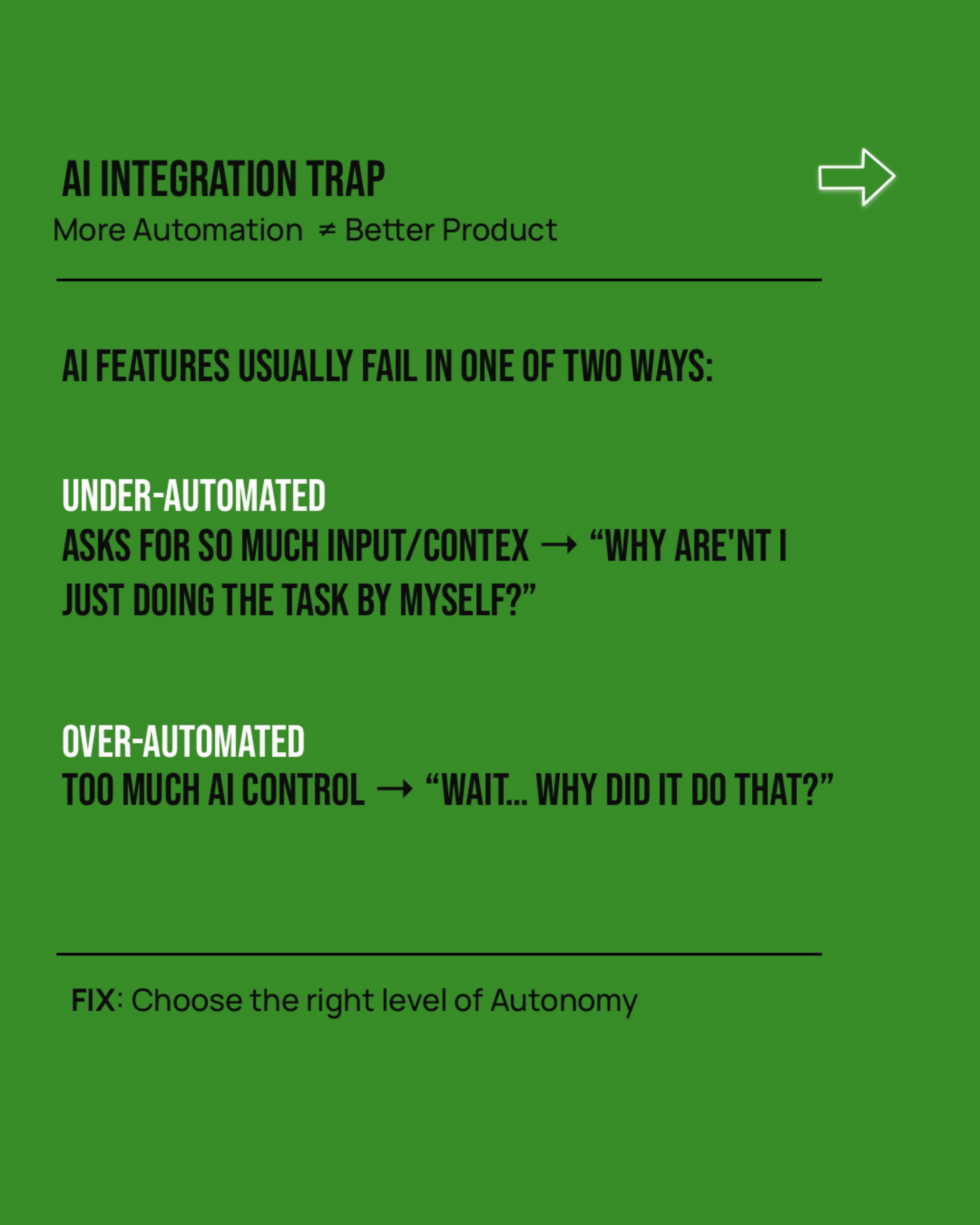
AI Integration Trap: more automation does not equal better product.

The two ways AI features break trust

When autonomy doesn't match user expectations, users experience one of two failure modes:

  • Under-automated. The AI asks for so much input and context that users wonder why they aren't just doing the task themselves.

  • Over-automated. The AI takes control too early or too confidently, making users feel uncomfortable, confused, or distrustful.

The paradox: bad automation can be worse than no automation.

Useful framework: Levels of Automation — Sheridan & Verplank

In the 1970s, Thomas Sheridan and Bill Verplank developed a framework that maps 10 distinct levels of autonomy in human-computer interaction.

Bill Verplank later taught at the Institute of Design (ID) at IIT, and I was lucky enough to take his human factors course — still one of the most memorable and useful lenses from my time at school.
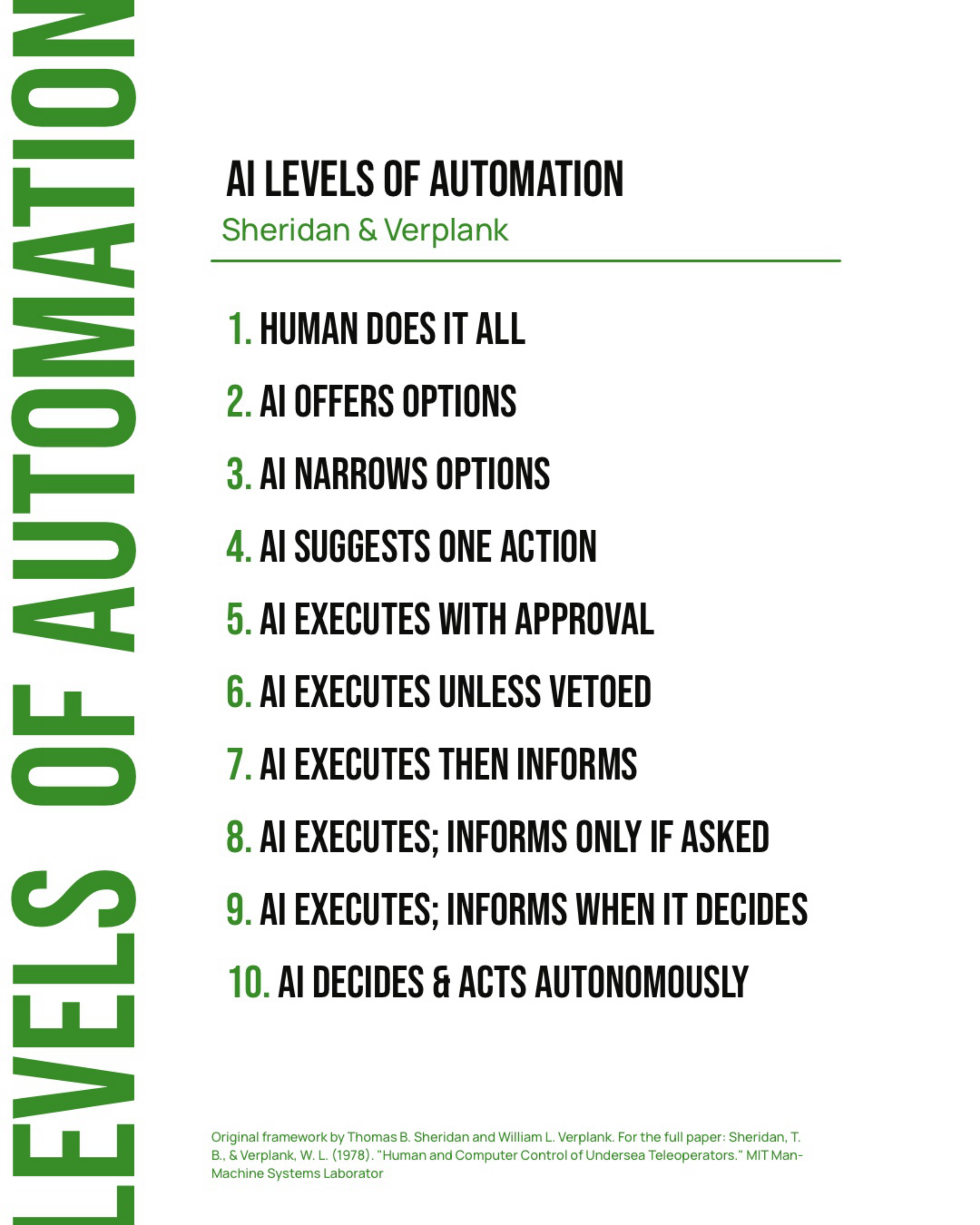
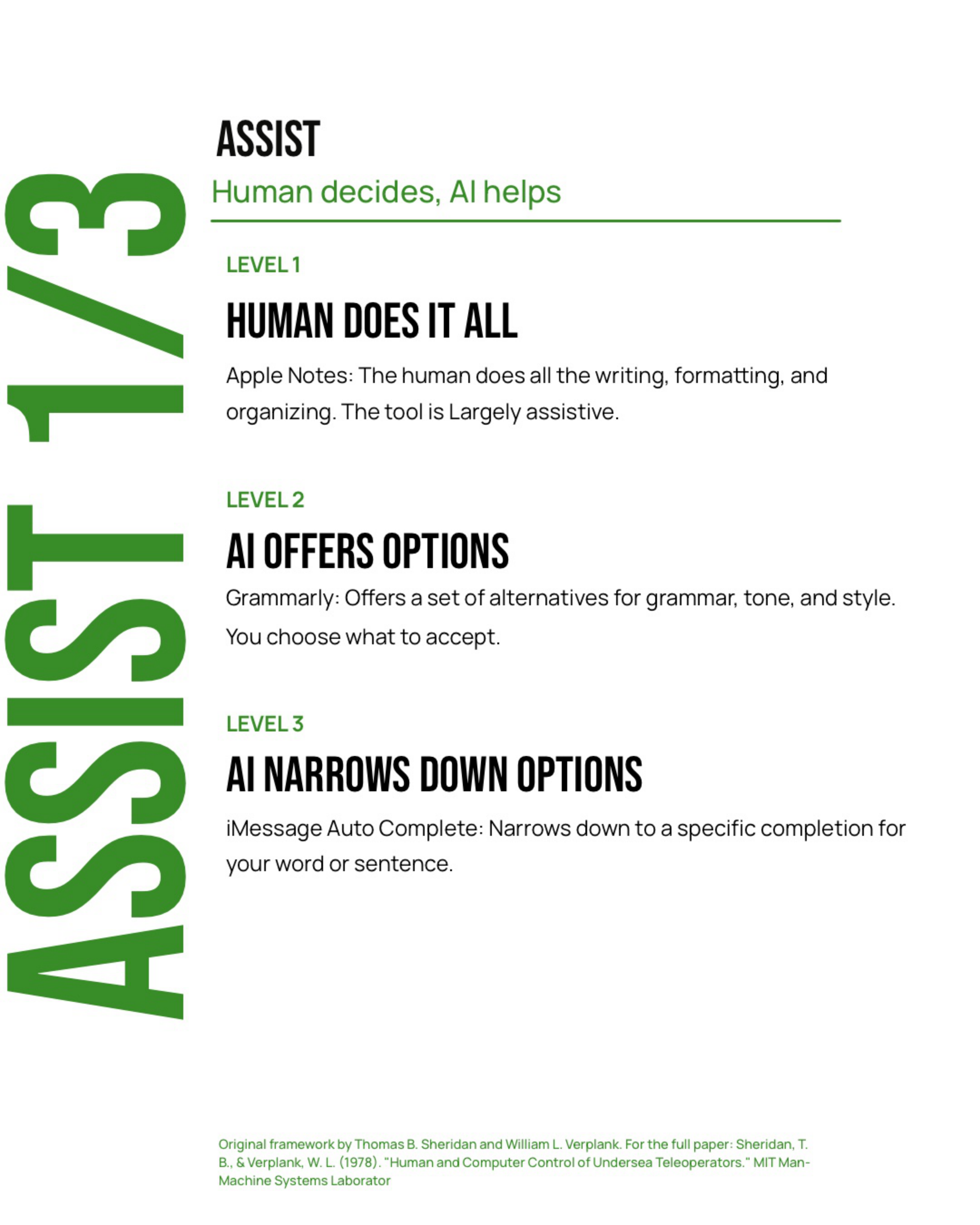
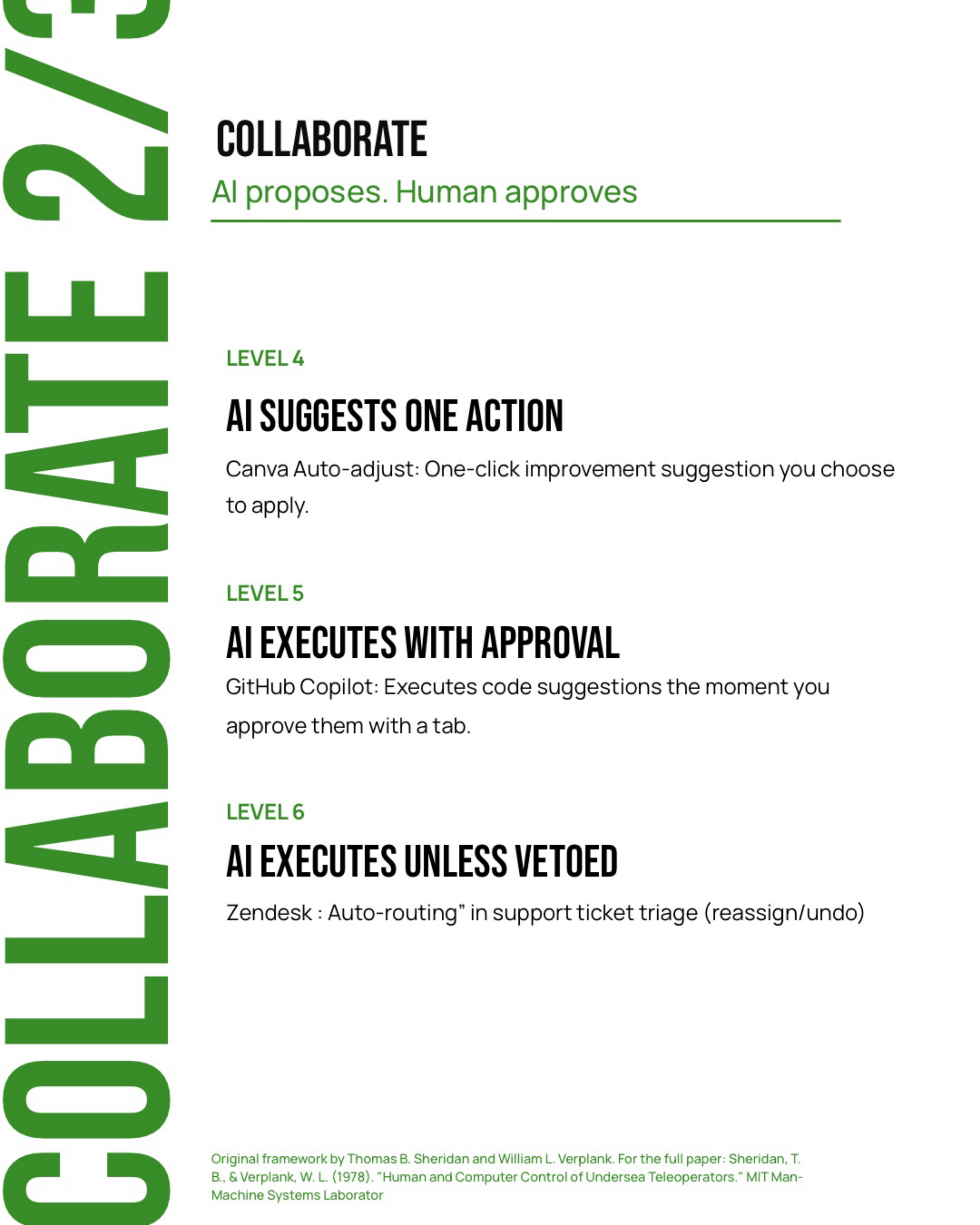
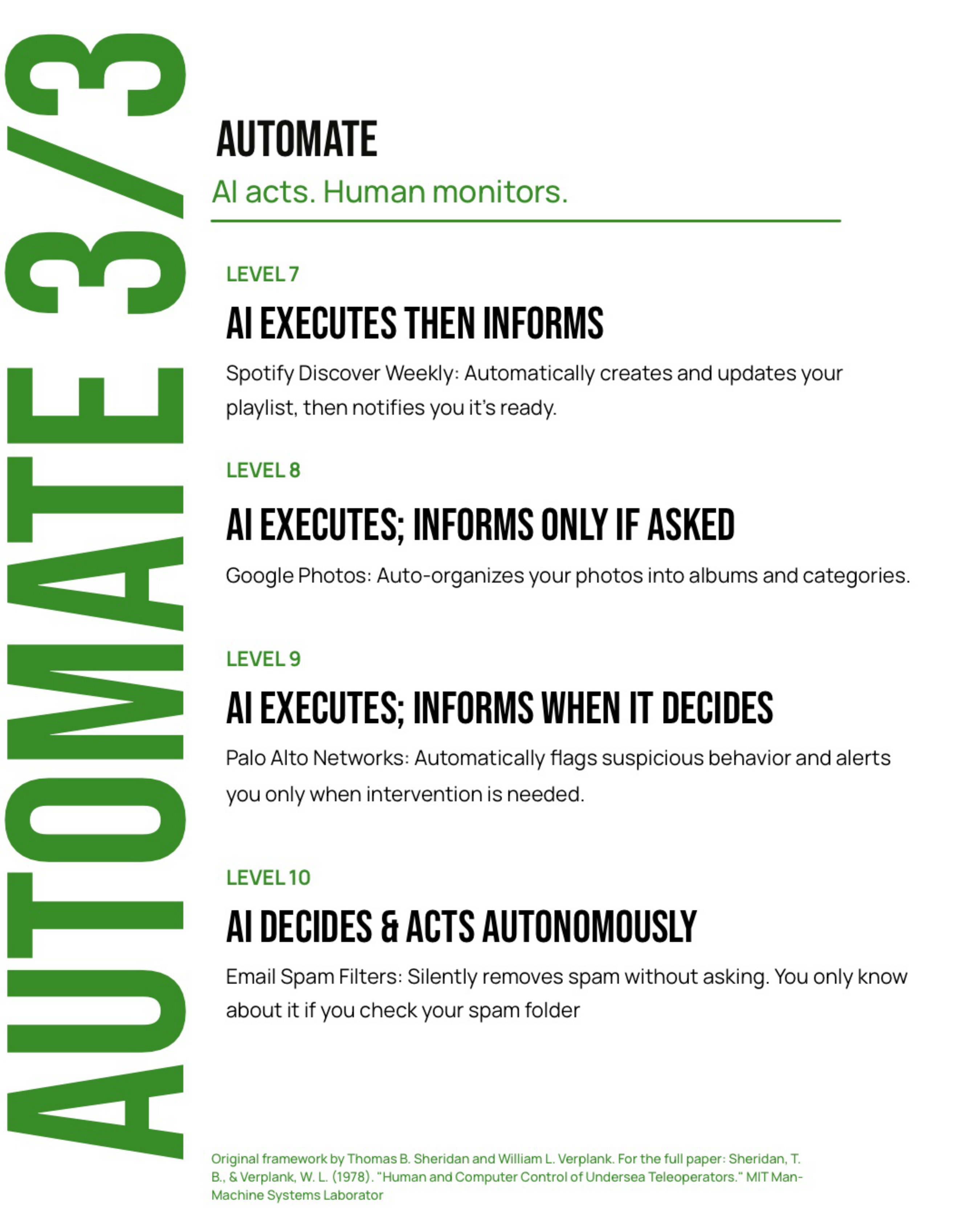
AI Levels of Automation by Sheridan and Verplank.

Application section

Assist: human decides, AI helps.
Collaborate: AI proposes, human approves.
Automate: AI acts, human monitors.

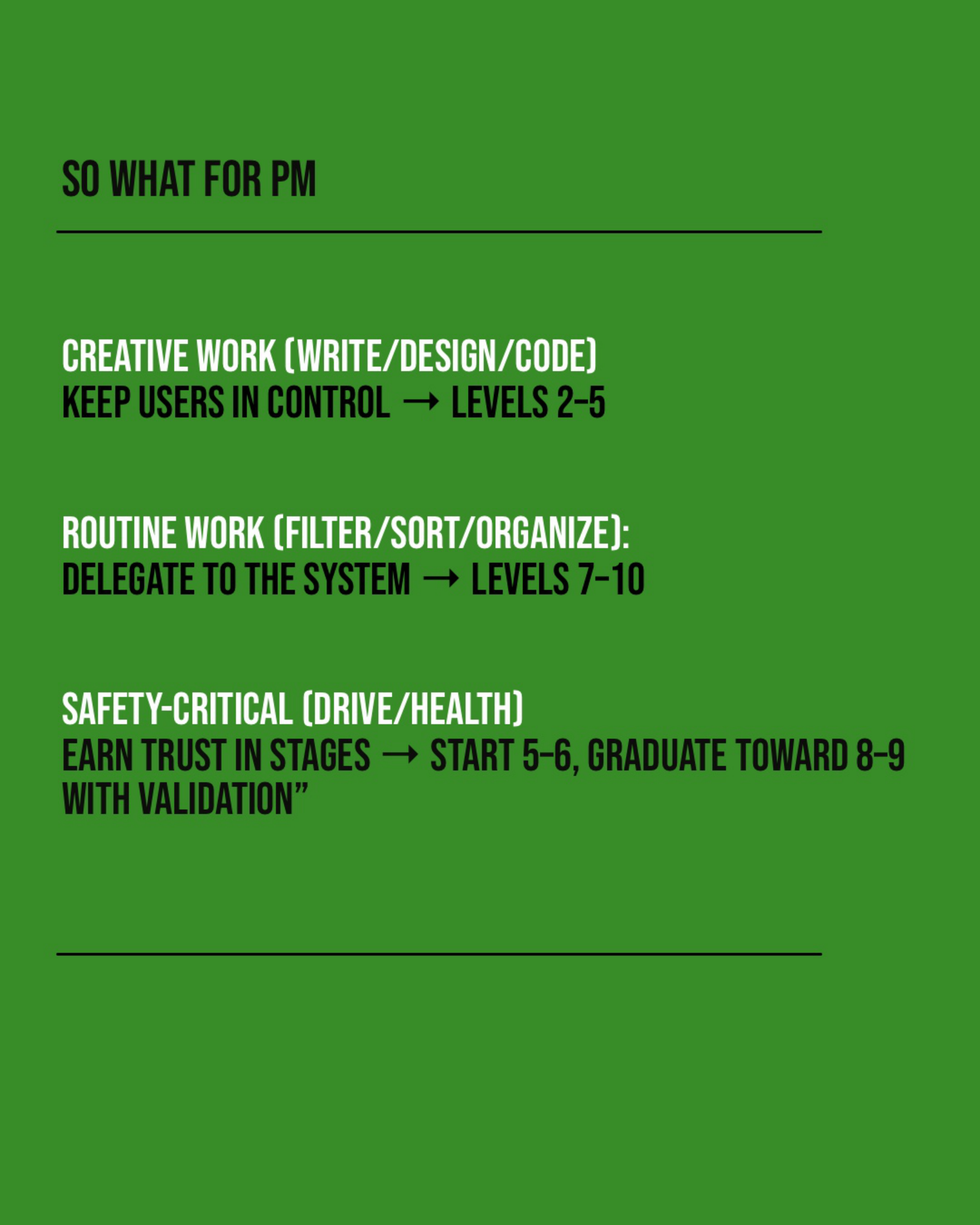
PM takeaway

So what for PM: match autonomy level to work type and risk.